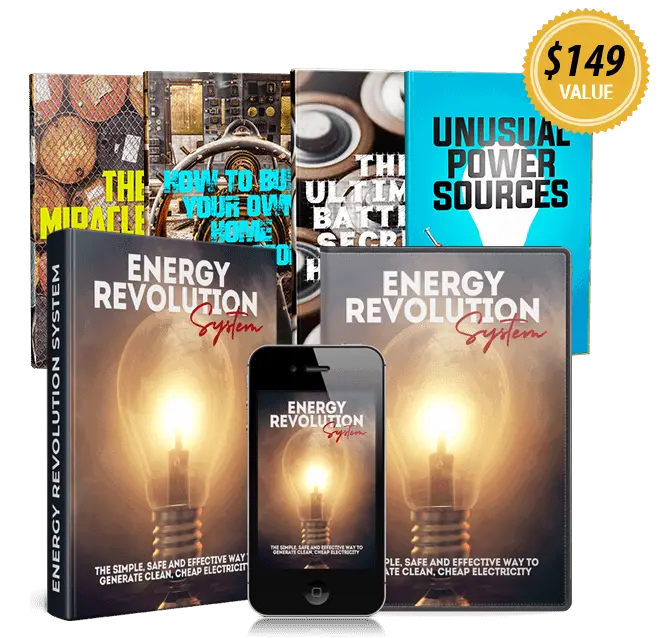
The Energy Revolution System is an online DIY manual (not a physical product) that gives you comprehensive, step-by-step guidance, plans, and tutorials for creating your own small-scale generator at home. It’s inspired by Nikola Tesla’s bifilar pancake coil patent from 1894 and utilizes basic materials like wires, magnets, and coils that you can find at hardware stores to potentially produce usable electricity through electromagnetic methods. The promotional claims indicate it can greatly cut down on electricity costs (often advertised as saving between 50-80%), offer supplementary or off-grid power for home needs, and act as a budget-friendly alternative to solar panels or conventional generators, all with a build cost of under $200.
Numerous reviews are available online, mainly from affiliate websites, YouTube videos, Medium articles, and blogs from the years 2025-2026. Many of these portray it as a credible guide with straightforward instructions and genuine (though modest) results when constructed properly.
Common positive feedback includes:
Clear and simple instructions, even for those just starting out.
Budget-friendly and educational (great for understanding electromagnetism and DIY energy solutions).
Some users have noticed actual reductions in their bills (like 40-65% during anecdotal trials after several weeks or months), particularly for small appliances, charging devices, or decreasing peak usage from the grid.
Handy as a backup during outages or for added power.
Usually includes a money-back guarantee.
On the flip side, more realistic evaluations (including fairer ones) point out:
It generates limited, low-voltage output that’s suitable for small gadgets (like lights, phones, or fans), but not for fully powering a home or heavy appliances like air conditioners or refrigerators, or achieving the kind of total energy independence that some marketing claims.
Savings are more supplemental than life-changing—expect modest, not major, reductions on bills.
Marketing can sometimes feature exaggerated statements (like “free energy” or huge savings), leading to letdowns if expectations run high.
It’s not a case of “perpetual motion” or over-unity (which would violate fundamental physics laws like the conservation of energy); any energy produced comes from the initial input/setup.